Content levels
Trigger warnings
Positive tags
Not yet taggedTropes
Not yet taggedThemes
Synopsis
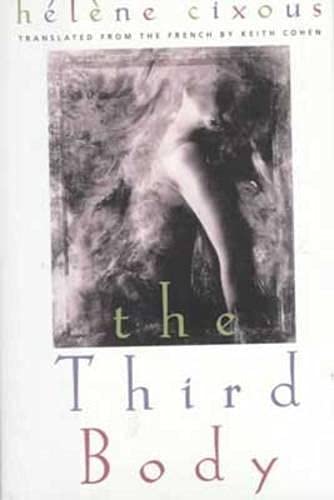
"In The Third Body, the poet, novelist, feminist critic, and theorist Helene Cixous interweaves a loose narrative line with anecdotal presentations, autobiography, lyricism, myth, dream, fantasy, philosophical insights, and intertextual citations of and conversations with other authors and thinkers. Cixous evokes the relationship of the female narrator and her lover, a relationship of alternating presences and absences, separations and rejoinings - a passionate and ever-buoyant relationship in which the partners partake of life and death, memory and oblivion, desire and discovery, the transgressive and the visionary, and the chimerical and the "real." This relationship assumes protean forms within a complex web of writing, creating a "third body" out of the entwined bodies of the narrator and her lover. This is a sensuous body endowed with flesh-and-blood reality, and it is also the body of the text: for Cixous, writing is grounded in the physical body, and the physical body becomes writing." "The three dominant texts that Cixous cites or alludes to Wilhelm Jensen's novel Gradiva; Freud's interpretation of that work in the essay "Delusion and Dream"; and Kleist's "Earthquake in Chile" - are integrated with reminiscences of the narrator's dead father, juxtaposed with thoughts about her lover; evocations of the narrator's mother; and ruminations on figures taken from Scripture, classical mythology, and fairy tales."--BOOK JACKET.
The Third Body: content & age rating
Intended for adult readers (18+).
This experimental literary work by French feminist theorist Hélène Cixous explores sensuality, desire, and the relationship between body and text through dense philosophical prose and intertextual references requiring mature readers.
What to know going in
This book has no graphic violence, moderate sexual content, and clean language. Content notes include death of parent.
Who'll love this
This philosophical work explores complex ideas about writing, memory, and relationships through experimental narrative techniques.