Content levels
Trigger warnings
Positive tags
Protagonist archetypes
Themes
Synopsis
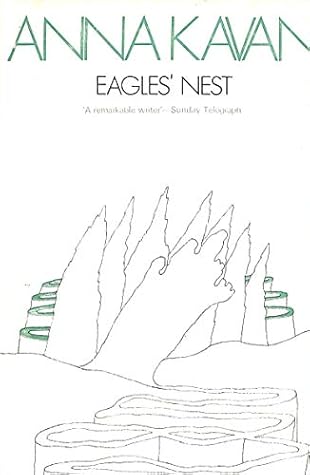
In this powerful fantasy Anna Kavan, whose work has become an international cult in recent years, describes the quality of life for an individual who cannot face the harsh impact of modern civilization. Exploring the shifting territory between the concrete world and the world of dreams, she questions both the ultimate reality of personal identity, and of existence itself. Her narrator, reduced to the lowest depths of misfortune by some unexplained event, sets out on a Kafkaesque journey to the rock-fortress of Eagles' Nest, and finds himself in some far-off, alien landscape, now vast and arid, burning under a searing sun, now lush with tropical vegetation or drenched by torrential waterfalls. His struggles to meet his former benefactor and future employer, A., his sinister encounters with the master's servants and with the local inhabitants, and this hallucinatory visions, lead to a crushing denouement that brings final recognition of his role in the scheme of things. First published in 1957 and now re-issued, this novel is one of the finest examples of Anna Kavan's powers to explore 'the nocturnal worlds of our dreams, fantasies, imagination and non-reason', Anais Nin in The Novel of the Future. (From the book jacket, british reprint published in 1976).
Is Eagle's Nest appropriate for my child?
Suitable for most readers 16 and up.
This is a psychologically complex, surreal literary fantasy exploring mental breakdown and alienation through dreamlike, hallucinatory imagery. The violence is psychological rather than physical, with disturbing themes of identity dissolution and existential crisis.
What to know going in
This book has moderate violence, no sexual content, and mild language. Content notes include mental illness, anxiety, and depression (see the full list above).
Who'll love this
Readers who enjoy surreal, dreamlike narratives that blur reality and fantasy will find this challenging literary work intriguing.